Measuring ROI in Sales Automation: Unlock Powerful Insights to Accelerate Success
Sales automation moves fast. Measure ROI to sharpen your sales engine. This guide breaks down the metrics, methods, and tactics you need. Leverage advanced analytics and AI-driven tools. Pull real insights on performance. Boost customer engagement. Cut friction. Prove the value of your investments. Master ROI measurement. Accelerate results.
Advanced analytics and AI are now core drivers of measurable sales performance and growth.
Boosting Sales ROI with Advanced Analytics & AI Automation
Advanced analytics unlock a wealth of sales insights. Companies are investing billions in sales technology and training as automation and AI scale. Those investments are powering new levels of performance and growth.
Boosting your sales ROI: How digital and analytics can drive new levels of performance and growth, 2018
Sales Automation ROI: Metrics, Methods & AI Insights
- Measuring ROI in sales automation requires tracking key metrics like ticket deflection rate, handle time, and customer satisfaction.
- Advanced analytics, CRM reporting, and A/B testing are essential methodologies for assessing sales automation ROI effectively.
- Continuous monitoring and data-driven insights help businesses optimize sales automation strategies for sustained success.
- AI enhances sales automation by personalizing interactions, predicting customer behavior, and automating lead nurturing processes.
- Sales automation improves efficiency, customer engagement, and provides valuable data for strategic decision-making.
- Industry use cases demonstrate significant ROI gains in real estate, healthcare, and e-commerce through sales automation.
- Key sales automation metrics include sales growth rate, lead conversion rate, and customer lifetime value for tracking success.
- Implementing structured data tools like analytics platforms and CRM systems facilitates accurate ROI tracking and continuous improvement.
- Optimizing sales funnels with AI lead scoring and real-time data analysis significantly boosts ROI and conversion rates.
Key Metrics for Measuring ROI
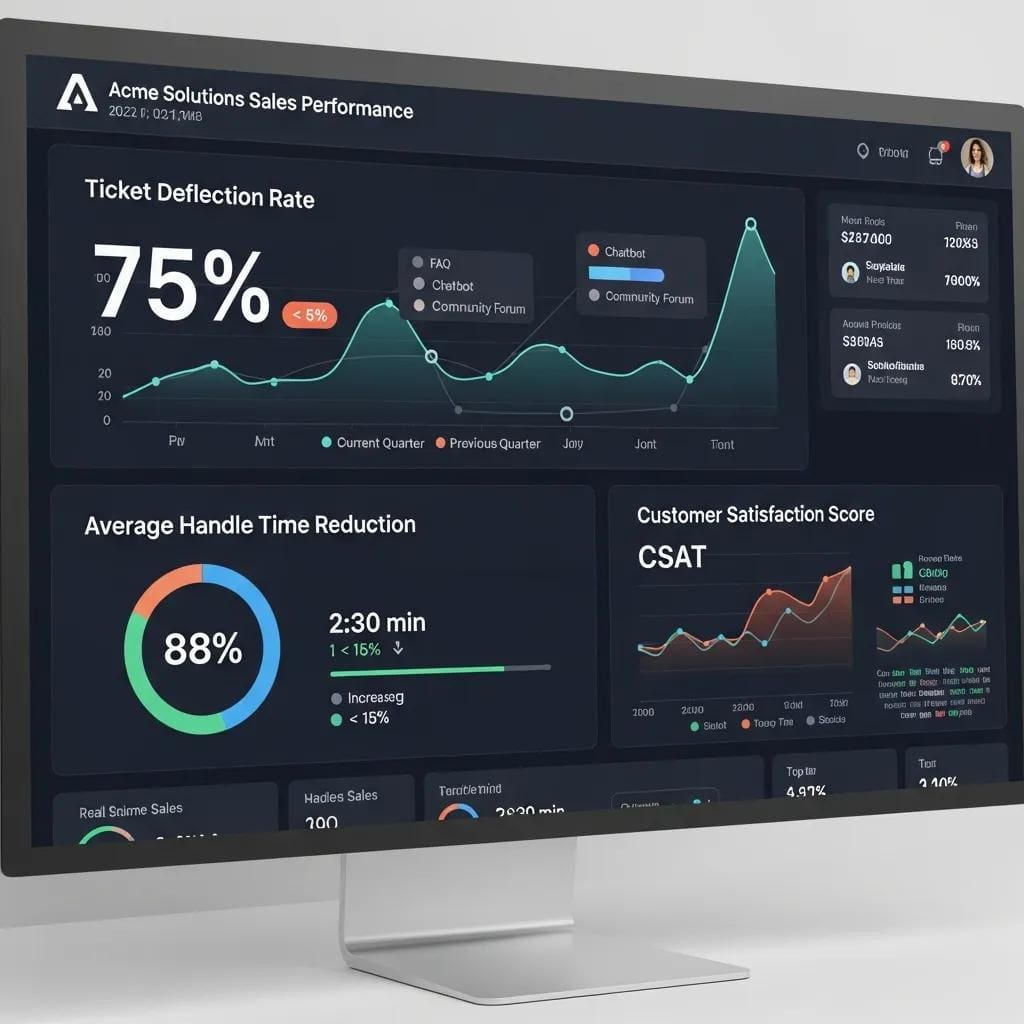
Pinpoint the metrics that prove impact. Track performance and efficiency. See how automation shifts sales outcomes and customer satisfaction.
- Ticket Deflection Rate: This metric measures the percentage of customer inquiries that are resolved without human intervention, indicating the effectiveness of automated systems in handling customer interactions.
- Average Handle Time Reduction: By tracking the time taken to resolve customer issues, businesses can assess the efficiency of their sales automation tools and identify areas for improvement.
- Customer Satisfaction Score (CSAT): This score reflects customer satisfaction levels and can be influenced by the quality of automated interactions, providing a direct link to the effectiveness of sales automation.
Use these metrics as the baseline to quantify automation’s financial impact.
| Metric | Description | Value |
|---|---|---|
| Ticket Deflection Rate | Percentage of inquiries resolved automatically | 75% |
| Average Handle Time Reduction | Decrease in time taken to resolve issues | 30% |
| Customer Satisfaction Score (CSAT) | Measure of customer satisfaction | 85% |
This side-by-side shows why tracking these metrics matters for evaluating lead generation effectiveness.
Methodologies for Assessing ROI
Take a structured approach. Combine multiple methods to fully assess automation investments.
- Advanced Analytics Tools: Utilizing data analytics platforms allows organizations to analyze sales data and customer interactions, providing insights into the effectiveness of automation.
- CRM Reporting: Customer Relationship Management (CRM) systems can generate reports that track sales performance and customer engagement, helping to quantify the impact of automation.
- A/B Testing: Implementing A/B testing enables businesses to compare different automation strategies and determine which approaches yield the highest ROI.
These methods form a clear framework to evaluate automation and pinpoint where to improve.
Funneler AI delivers advanced analytics to streamline sales processes and sharpen customer interactions. Tap AI-driven insights. Optimize your strategy. Maximize ROI.
Strategies for Accelerating Success
Move fast with targeted strategies. Focus on continuous improvement and data-led decisions.
- Continuous Monitoring: Regularly tracking performance metrics allows organizations to identify trends and make informed adjustments to their automation strategies.
- Data-Driven Insights: Leveraging data analytics to inform decision-making ensures that businesses are making strategic choices based on empirical evidence rather than assumptions.
- Personalization: Tailoring automated interactions to individual customer preferences can significantly improve engagement and satisfaction, leading to higher conversion rates.
Apply these tactics to squeeze maximum value from sales automation and drive lasting growth.
Funneler AI’s AI agent services help implement these strategies. Automate interactions. Deliver personalized experiences. Capture measurable ROI improvements.
How Do You Calculate Sales Automation ROI Effectively?
Calculate ROI with a simple formula.
Use that formula to quantify financial returns from automation. Measure net profit and total costs accurately to assess effectiveness.
What Metrics Drive Accurate ROI Calculation?
Key metrics that drive precise ROI calculations:
- Revenue Growth: Tracking increases in sales revenue directly attributable to automation efforts.
- Cost Savings: Identifying reductions in operational costs resulting from improved efficiency and reduced manual labor.
- Customer Retention Rates: Measuring the impact of automation on customer loyalty and repeat business.
Together, these metrics reveal the full financial picture of sales automation.
Which Tools Simplify Sales Automation ROI Measurement?
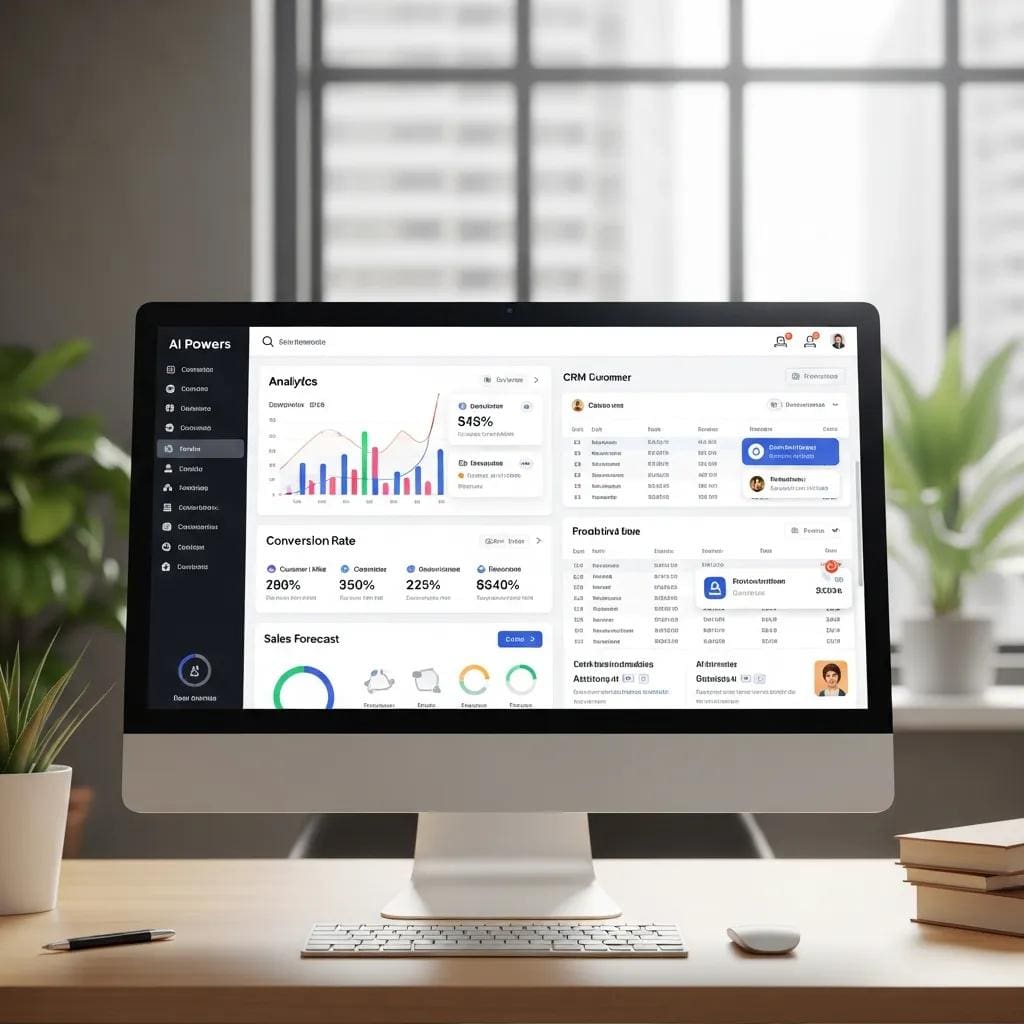
Use tools that make ROI measurement straightforward and reliable.
- Analytics Platforms: Tools like Google Analytics and Tableau provide insights into sales performance and customer behavior.
- CRM Systems: Salesforce and HubSpot offer robust reporting features that help track sales metrics and customer interactions.
- A/B Testing Software: Platforms like Optimizely enable businesses to test different automation strategies and measure their effectiveness.
These platforms enable precise ROI tracking and smarter, data-driven decisions.
What Are the Game-Changing Benefits of Sales Automation?
Sales automation delivers transformative benefits that drive measurable results:
- Increased Efficiency: Automating repetitive tasks frees up sales teams to focus on high-value activities, improving overall productivity.
- Enhanced Customer Engagement: Automated interactions can provide timely responses to customer inquiries, leading to improved satisfaction and loyalty.
- Data-Driven Insights: Sales automation tools generate valuable data that can inform strategic decision-making and optimize sales processes.
These outcomes prove why investing in sales automation pays off.
How Does AI Boost Lead Engagement and Nurturing?
AI fuels lead engagement and nurturing through powerful capabilities:
- Personalized Interactions: AI algorithms can analyze customer data to deliver tailored messages and recommendations, increasing engagement.
- Predictive Analytics: By forecasting customer behavior, AI can help sales teams prioritize leads and tailor their approaches for maximum impact.
- Automated Follow-Ups: AI-driven systems can schedule and send follow-up communications, ensuring that leads remain engaged throughout the sales funnel.
These tools let businesses nurture leads more effectively and boost conversion rates.
Why Does Sales Process Optimization Skyrocket ROI?
Optimize the sales process to unlock maximum ROI because it:
- Reduces Wasted Resources: Streamlining workflows minimizes inefficiencies and ensures that resources are allocated effectively.
- Improves Conversion Rates: A well-optimized sales process enhances the customer experience, leading to higher conversion rates and increased revenue.
- Facilitates Scalability: Optimized processes can be scaled more easily, allowing businesses to grow without proportionally increasing costs.
Prioritizing optimization drives a significant ROI uplift.
Which AI Sales Automation Tools Deliver Maximum ROI?
These AI sales tools consistently deliver strong ROI:
- Funneler AI: This platform automates customer interactions and optimizes sales processes, providing businesses with valuable insights and improved efficiency.
- Salesforce Einstein: An AI-powered feature within Salesforce that enhances CRM capabilities by providing predictive analytics and personalized recommendations.
- HubSpot Sales Hub: Offers automation features that streamline sales processes and improve lead management, resulting in higher conversion rates.
They demonstrate how AI amplifies sales automation and drives measurable returns.
What Features Define Top AI Sales Automation Platforms?
Top AI platforms pack the features you need:
- Advanced Analytics: Tools that provide insights into sales performance and customer behavior.
- Integration Capabilities: The ability to seamlessly integrate with existing CRM systems and other business tools.
- User-Friendly Interfaces: Intuitive designs that facilitate ease of use for sales teams.
These features unlock maximum platform effectiveness.
How Do AI Agents Transform Sales Funnels?
AI agents reshape sales funnels by: call agents
- Automating Lead Qualification: AI can assess leads based on predefined criteria, ensuring that sales teams focus on the most promising opportunities.
- Enhancing Customer Interactions: AI agents can engage with customers in real-time, providing instant responses and support.
- Streamlining Follow-Up Processes: Automated follow-ups ensure that leads are nurtured consistently throughout the sales funnel.
These shifts boost efficiency and lift conversion rates.
Targeted AI lead scoring is key to spotting and prioritizing high-potential opportunities inside the sales funnel.
Optimizing Sales Funnel ROI with AI Lead Scoring
Segmenting new commercial leads is a critical endeavor for contemporary businesses operating in highly competitive markets, aiming to unearth lucrative opportunities and bolster their Return On Investment (ROI). Business lead scoring entails attributing a score, representing the likelihood of a lead to make a purchase, to each potential lead generated for the business. These leads’ interactions across various marketing channels on the internet yield valuable attributes, including pertinent information such as contact details, lead source, and channel, alongside behavioral cues like response speed and movement tracking. This process aids in evaluating the quality of opportunities and their stage in the purchasing journey. Moreover, an accurate lead scoring mechanism empowers marketing and sales teams to prioritize leads effectively and respond promptly, thereby enhancing the likelihood of conversion. Leveraging machine learning algorithms can streamline this process.
Optimizing sales funnel efficiency: deep learning techniques for lead scoring, KK Sharma, 2023
How Can Industry Use Cases Prove Sales Automation ROI?
Use industry case studies to prove impact. See real examples that show real ROI. For example:
- Real Estate: Agents using automation tools have reported increased lead conversion rates and reduced time spent on administrative tasks.
- Healthcare: Automated patient follow-ups have improved appointment attendance rates and enhanced patient satisfaction.
- E-commerce: Businesses leveraging sales automation have seen significant increases in sales revenue and customer retention.
These cases prove sales automation drives tangible results across industries.
What ROI Gains Do Realtors and Healthcare See?
Realtors and healthcare providers see clear ROI gains from automation:
- Realtors: Automation tools help streamline lead management and follow-up processes, resulting in higher conversion rates and increased sales.
- Healthcare: Automated patient engagement systems improve appointment scheduling and follow-up care, leading to enhanced patient satisfaction and retention.
These outcomes show automation’s role in driving business success.
How Startups and E-commerce Scale with AI Automation?
Startups and e-commerce scale quickly with AI automation by:
- Streamlining Operations: Automation reduces the need for manual processes, allowing businesses to operate more efficiently.
- Enhancing Customer Experience: AI-driven personalization improves customer interactions, leading to higher satisfaction and loyalty.
- Facilitating Growth: Scalable automation solutions enable businesses to expand their operations without a proportional increase in costs.
These capabilities enable scalable growth for fast-moving businesses.
What Sales Automation Metrics Track Success and Growth?
Track these metrics to measure success and growth:
- Sales Growth Rate: Measures the percentage increase in sales over a specific period.
- Lead Conversion Rate: Tracks the percentage of leads that convert into paying customers.
- Customer Lifetime Value (CLV): Estimates the total revenue generated from a customer throughout their relationship with the business.
They provide clear insight into how well automation is driving growth.
Which KPIs Measure Lead Engagement and Conversion?
KPIs that track lead engagement and conversion include:
- Email Open Rates: Indicates the effectiveness of email campaigns in engaging leads.
- Click-Through Rates (CTR): Measures the percentage of leads that click on links within emails or advertisements.
- Sales Cycle Length: Tracks the time taken to convert a lead into a customer, providing insights into the efficiency of the sales process.
These KPIs are vital for evaluating automation success.
How to Use Sales Funnel Analytics to Optimize ROI?
Use funnel analytics to optimize ROI by:
- Identifying Bottlenecks: Analyzing funnel data helps pinpoint stages where leads drop off, allowing for targeted improvements.
- Enhancing Lead Nurturing: Understanding lead behavior enables businesses to tailor their nurturing strategies for maximum impact.
- Measuring Campaign Effectiveness: Funnel analytics provide insights into the performance of marketing campaigns, informing future strategies.
Those practices drive better ROI through focused, data-driven changes.
How Do You Implement and Monitor Sales Automation ROI?
Implement and monitor ROI with a clear, repeatable process:
- Define Clear Objectives: Establish specific goals for sales automation initiatives to guide measurement efforts.
- Select Relevant Metrics: Choose metrics that align with business objectives and provide insights into performance.
- Regularly Review Performance: Continuously monitor metrics and adjust strategies based on data-driven insights.
Follow these steps to measure and improve your automation ROI effectively.
What Structured Data and Tools Enhance ROI Tracking?
Structured data and tools that boost ROI tracking include:
- Data Analytics Platforms: Tools like Google Analytics provide insights into customer behavior and sales performance.
- CRM Systems: CRM platforms offer reporting features that help track sales metrics and customer interactions.
- Business Intelligence Tools: Solutions like Tableau enable organizations to visualize data and identify trends.
These systems enable precise tracking and support smarter decisions.
How to Use Real-Time Data to Drive Continuous Improvement?
Use real-time data to sharpen performance by:
- Monitoring Key Metrics: Regularly tracking performance metrics allows businesses to identify trends and make timely adjustments.
- Implementing Feedback Loops: Gathering feedback from customers and sales teams helps inform improvements in automation strategies.
- Adapting to Market Changes: Real-time data enables organizations to respond quickly to shifts in customer behavior and market conditions.
These habits let teams continuously refine automation and maximize ROI.
Frequently Asked Questions
What are the common challenges in measuring ROI for sales automation?
Measuring ROI brings real challenges. It’s hard to isolate automation’s impact from other factors. Poor data quality and inconsistent inputs block clear insights. Results often show up after a delay, which complicates quick evaluations. And many teams lack metrics that capture the full scope of automation benefits.
How can businesses ensure they are using the right metrics for ROI measurement?
Start by aligning metrics with your objectives. Pick KPIs tied to sales outcomes—like lead conversion and CSAT. Review and adjust those metrics regularly. Bring sales, marketing, and finance to the table for broader perspective.
What role does employee training play in maximizing sales automation ROI?
Training is essential. Well-trained teams use automation features effectively. They boost productivity and improve customer interactions. Training builds a data-driven culture. Ongoing support keeps teams agile as tools evolve.
How can businesses leverage customer feedback to improve sales automation strategies?
Collect feedback through surveys, interviews, and forms. Analyze it to find journey pain points and automation gaps. Tailor automated interactions to match customer preferences. Then roll out fixes that lift conversions and ROI.
What are some best practices for continuous monitoring of sales automation performance?
Set regular reporting cadences for key metrics. Use real-time dashboards to spot trends fast. Create feedback loops so sales teams flag issues quickly. Revisit and tweak automation based on actual performance data.
How can businesses effectively integrate AI into their sales automation processes?
Target specific use cases where AI adds value, like lead scoring or segmentation. Choose tools that fit your existing systems. Train staff on how to apply AI insights in their workflows. Measure results continuously and tune models as needed.
Conclusion
Measure ROI to sharpen sales and boost customer engagement. Focus on the right metrics and use advanced analytics to unlock performance gains and sustainable growth. Apply targeted strategies and tools to keep improving automation. Discover how our solutions can elevate your sales automation journey today.